Introduction
In this article, you will learn how to add comments and notes to an ARO, as well as use the activity feed to track updates and collaboration.
Add a Comment or Note to an ARO
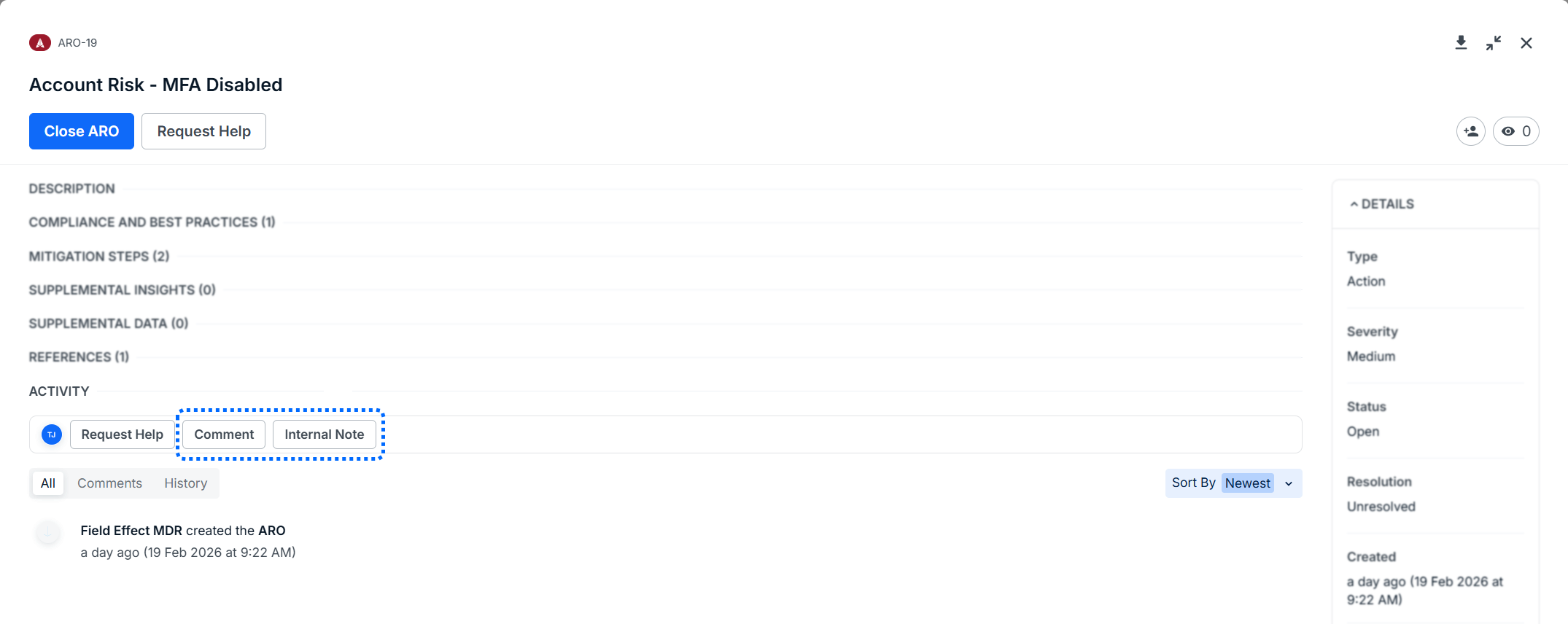
- Open the ARO you want to update
- Navigate to the Comments or Activity Feed panel
- Enter your message in the comment field
- Select Post (or equivalent action)
Your comment is added to the activity feed and becomes part of the ARO’s history. Internal notes are also added to the activity feed but are restricted to internal users.
Comments vs. Internal Notes
| Type | Visibility | Use case |
|---|---|---|
| Comments | Shared (may be visible to partners/clients depending on setup) | Collaboration, updates, communication |
| Internal notes | Internal only (not visible to external audiences) | Investigation details, sensitive context, internal decisions |
When to use each
Use comments when:
- You are communicating updates to others
- Information should be visible in shared workflows
Use internal notes when:
- The information is sensitive or internal-only
- You are documenting investigation steps or internal reasoning
View the Activity Feed
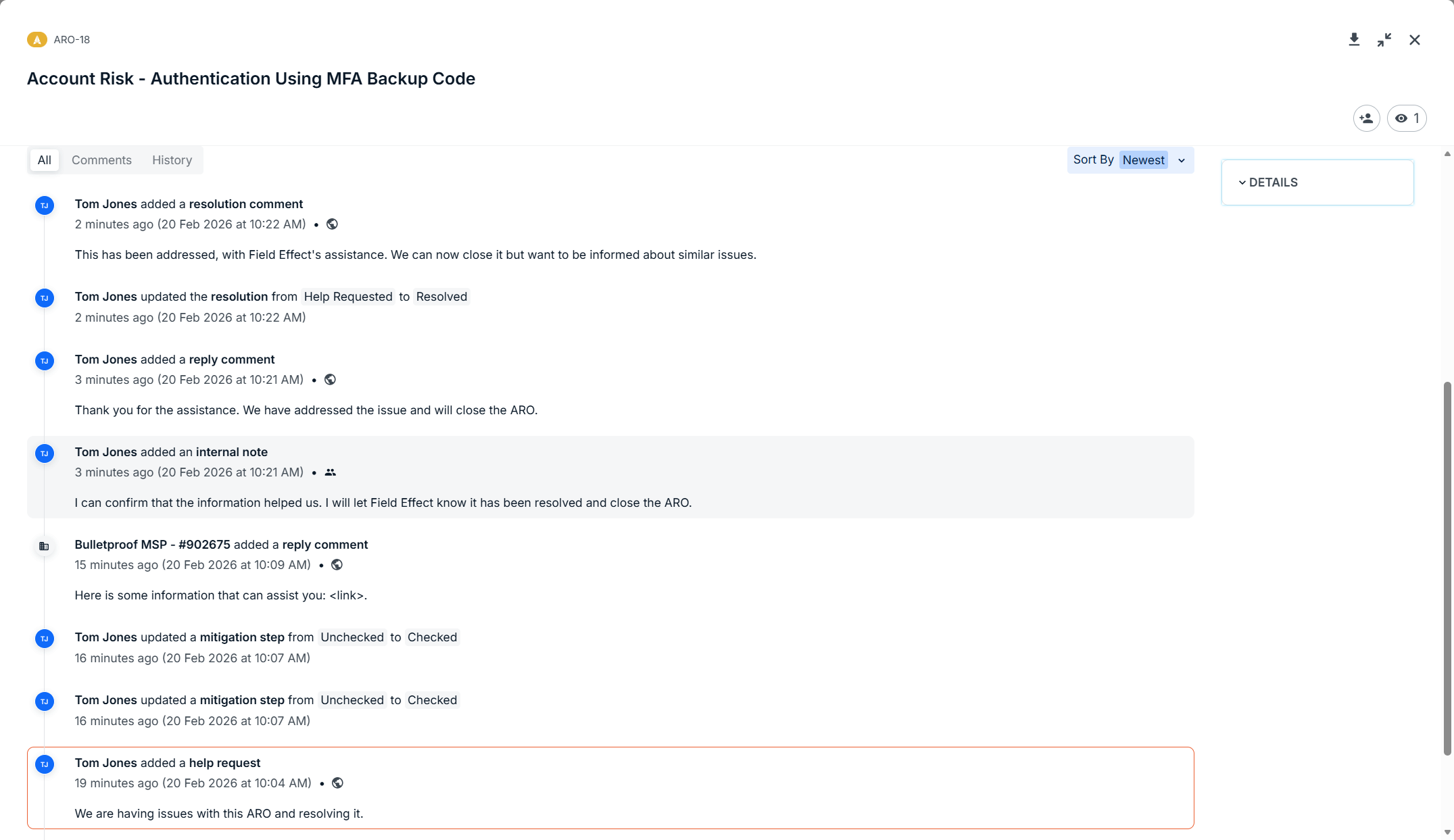
The activity feed shows a timeline of all updates to the ARO, including:
- Comments
- Internal notes
- Status changes
- Assignments
- System-generated events
Use this feed to understand what has changed and when.
Filter and Sort the Activity Feed
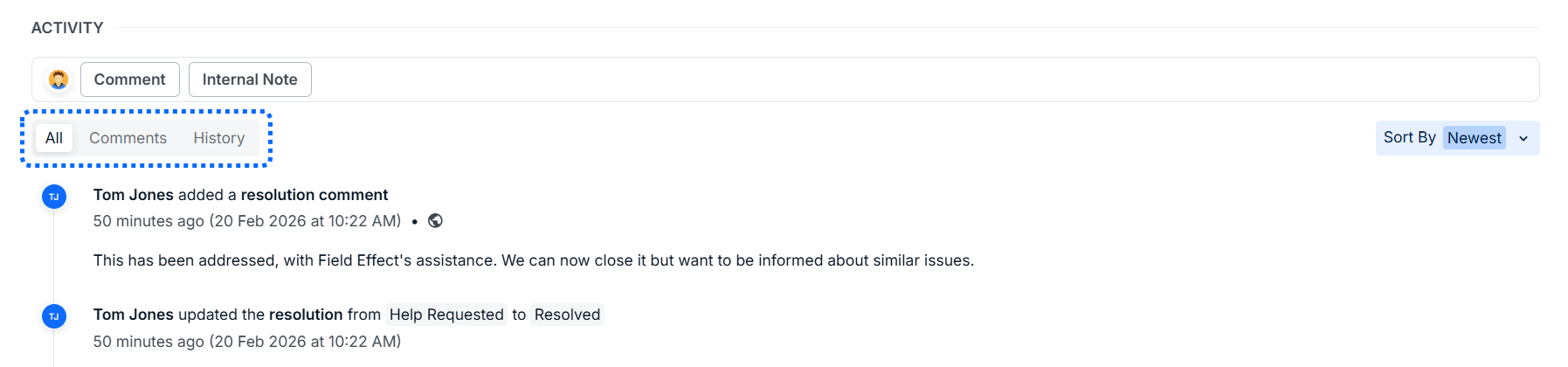
The activity feed includes the following sort and filter options:
- Sort: Oldest or newest first.
- Filter:
- All: shows the creation date, every status change, mitigation step update, comment and internal note added to the ARO.
- History: shows ARO event events logs (creation date, status changes, mitigation step updates).
- Comments: shows comments and internal notes made to the ARO.
Activity Notifications
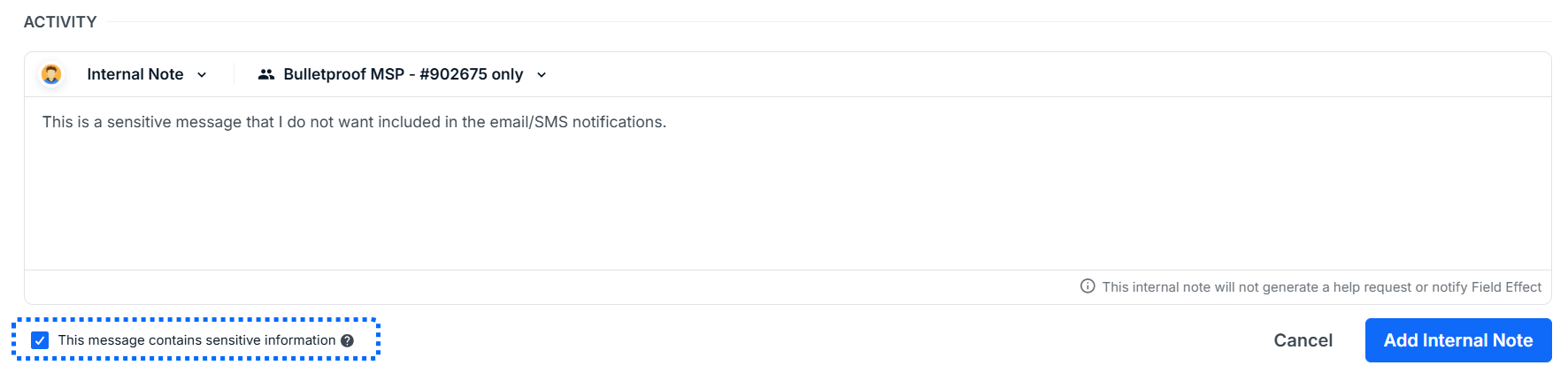
When an ARO is updated with new activity, users watching the ARO will receive a notification via SMS or email, depending on their profile settings.
When leaving a comment or internal note that includes sensitive information that you do not want included in notifications, select the sensitive information checkbox. This will remove the contents of the message from the email notification, keeping it only viewable from within the MDR Portal.
Was this article helpful?
That’s Great!
Thank you for your feedback
Sorry! We couldn't be helpful
Thank you for your feedback
Feedback sent
We appreciate your effort and will try to fix the article